
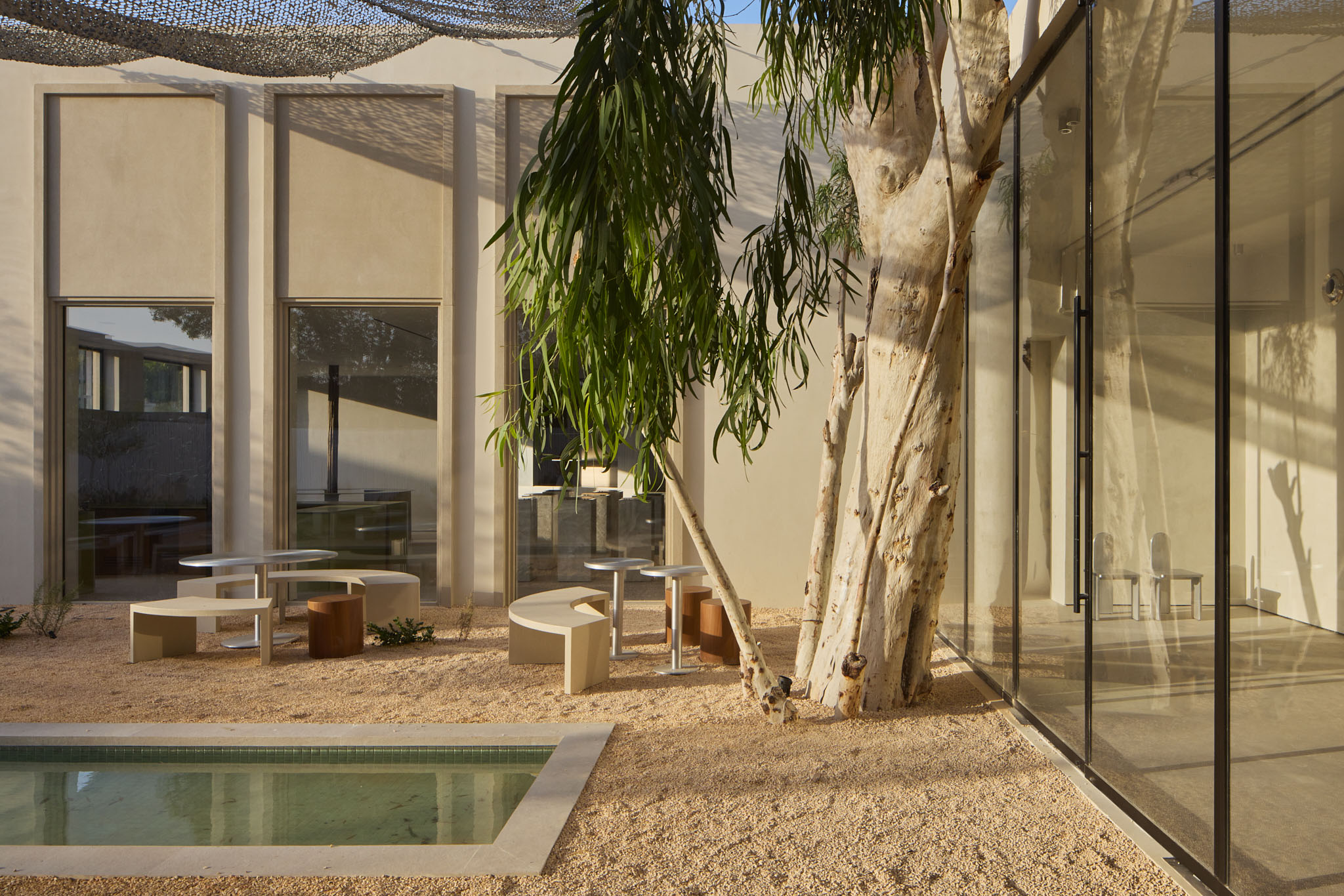
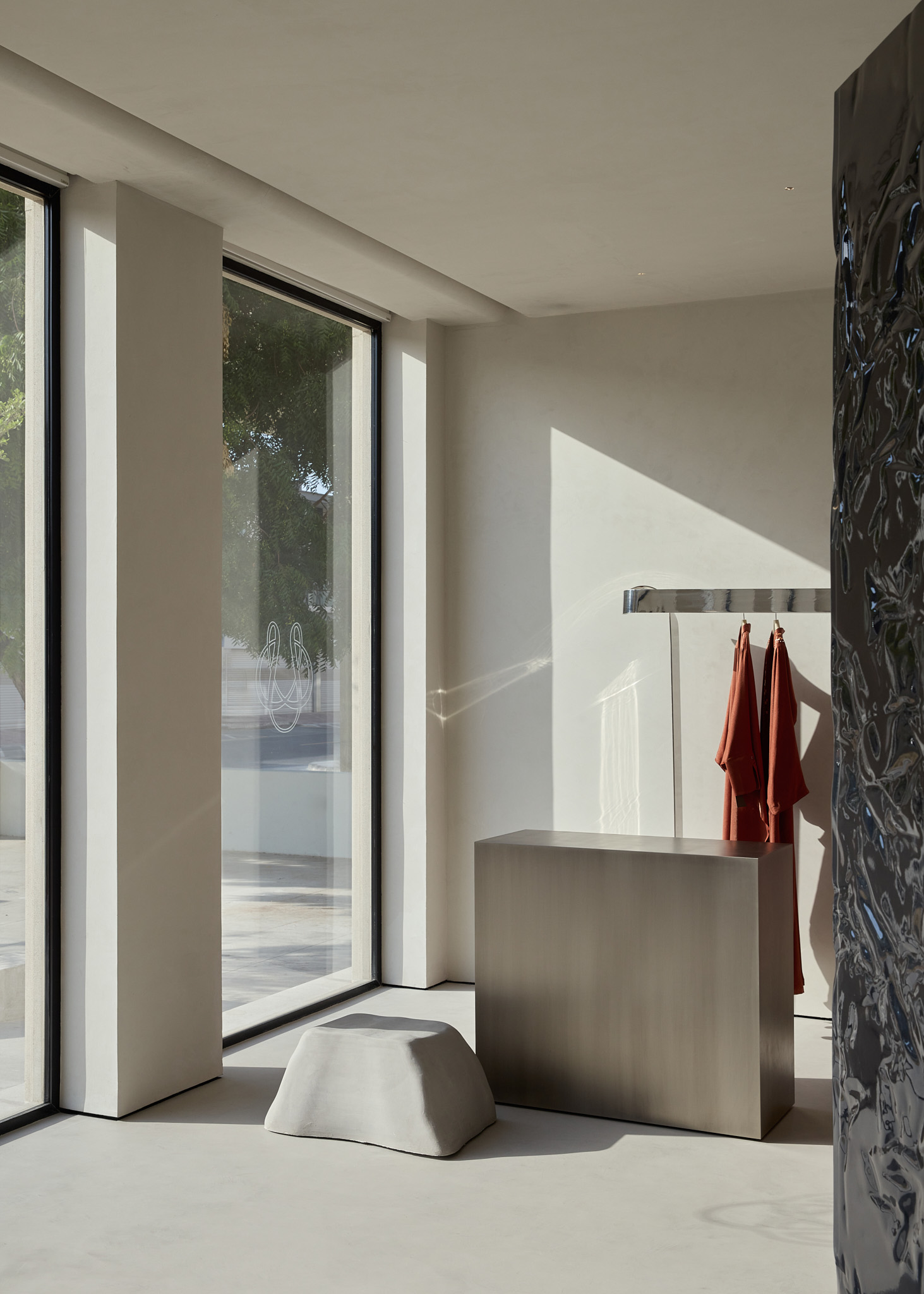
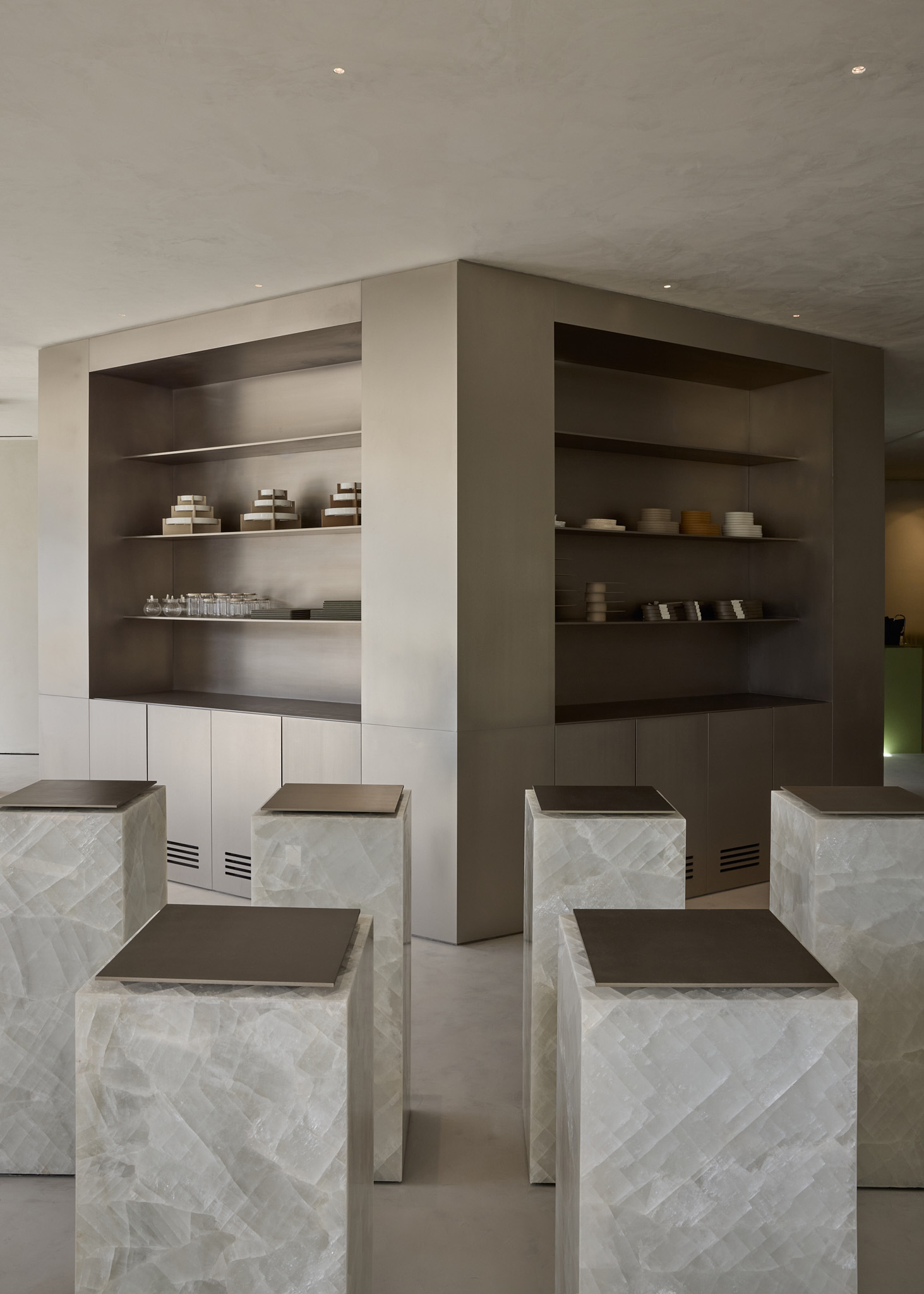
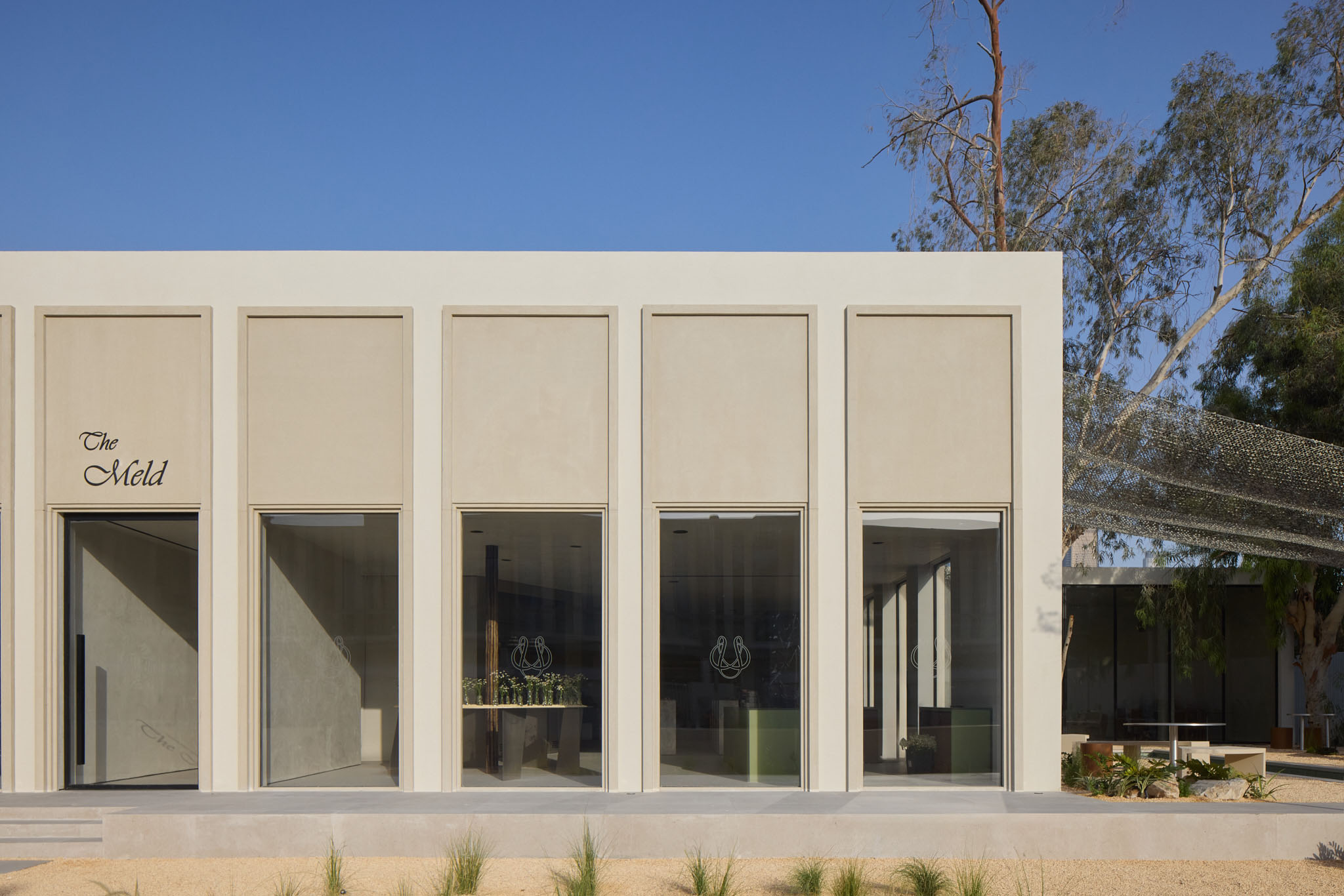
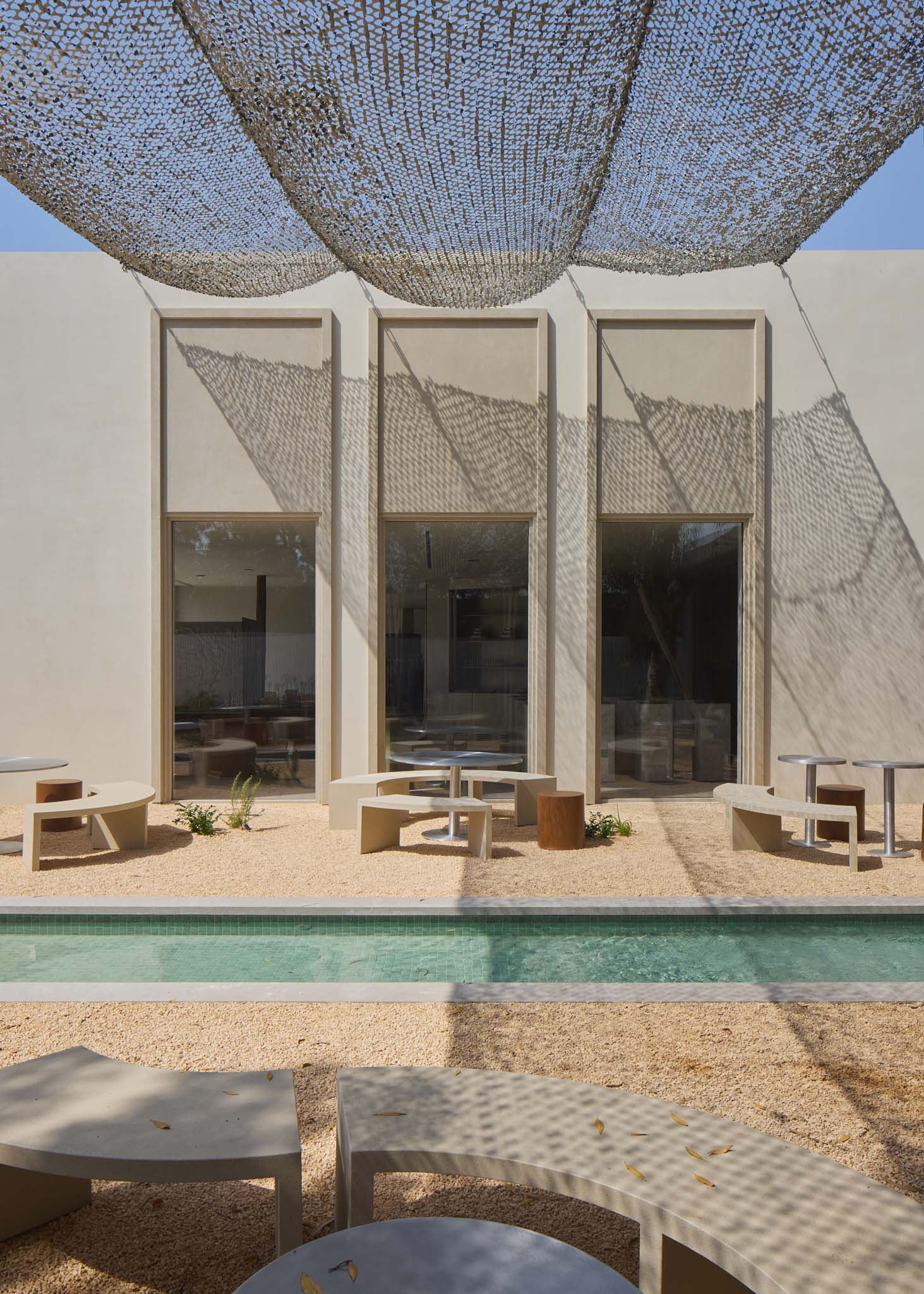
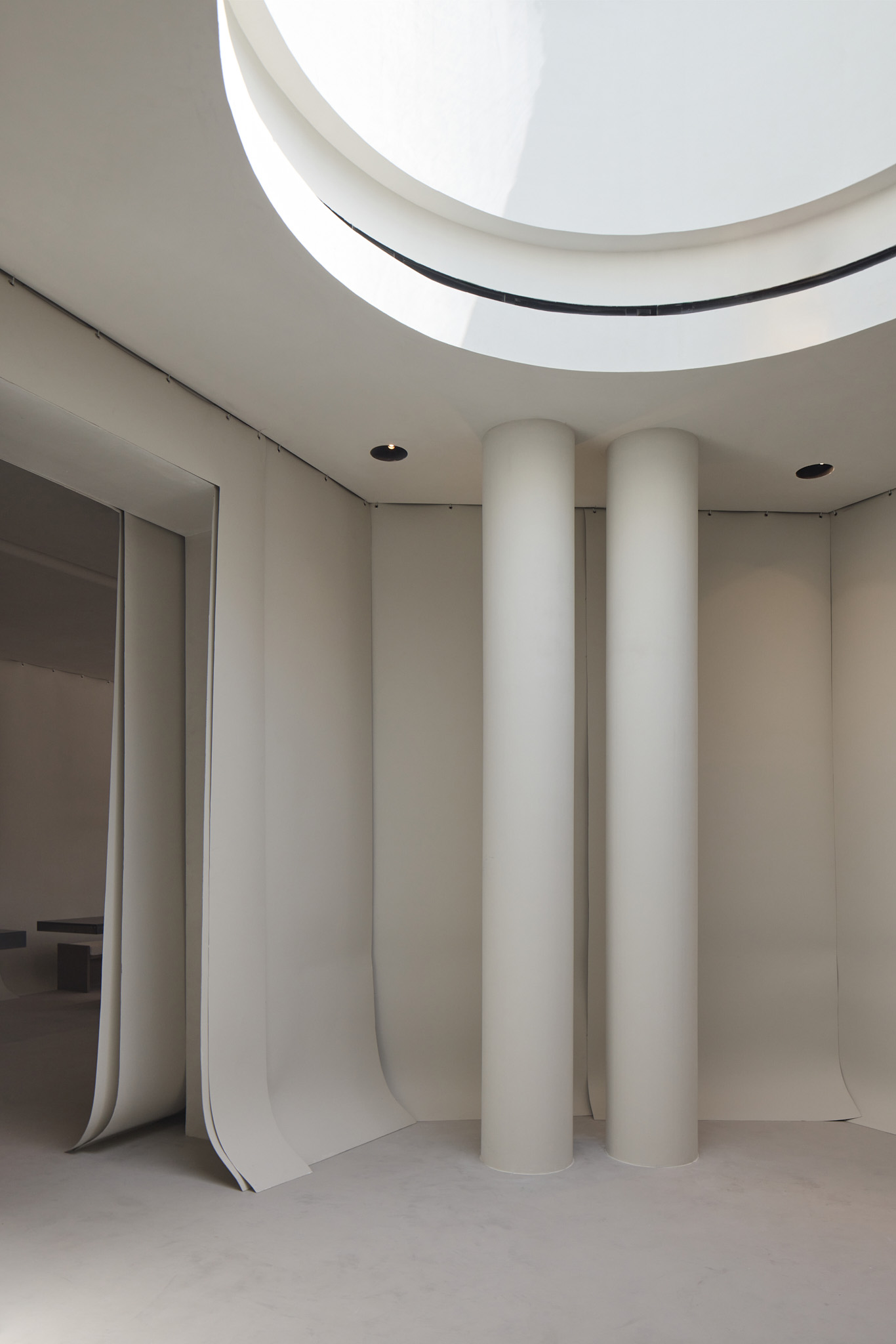
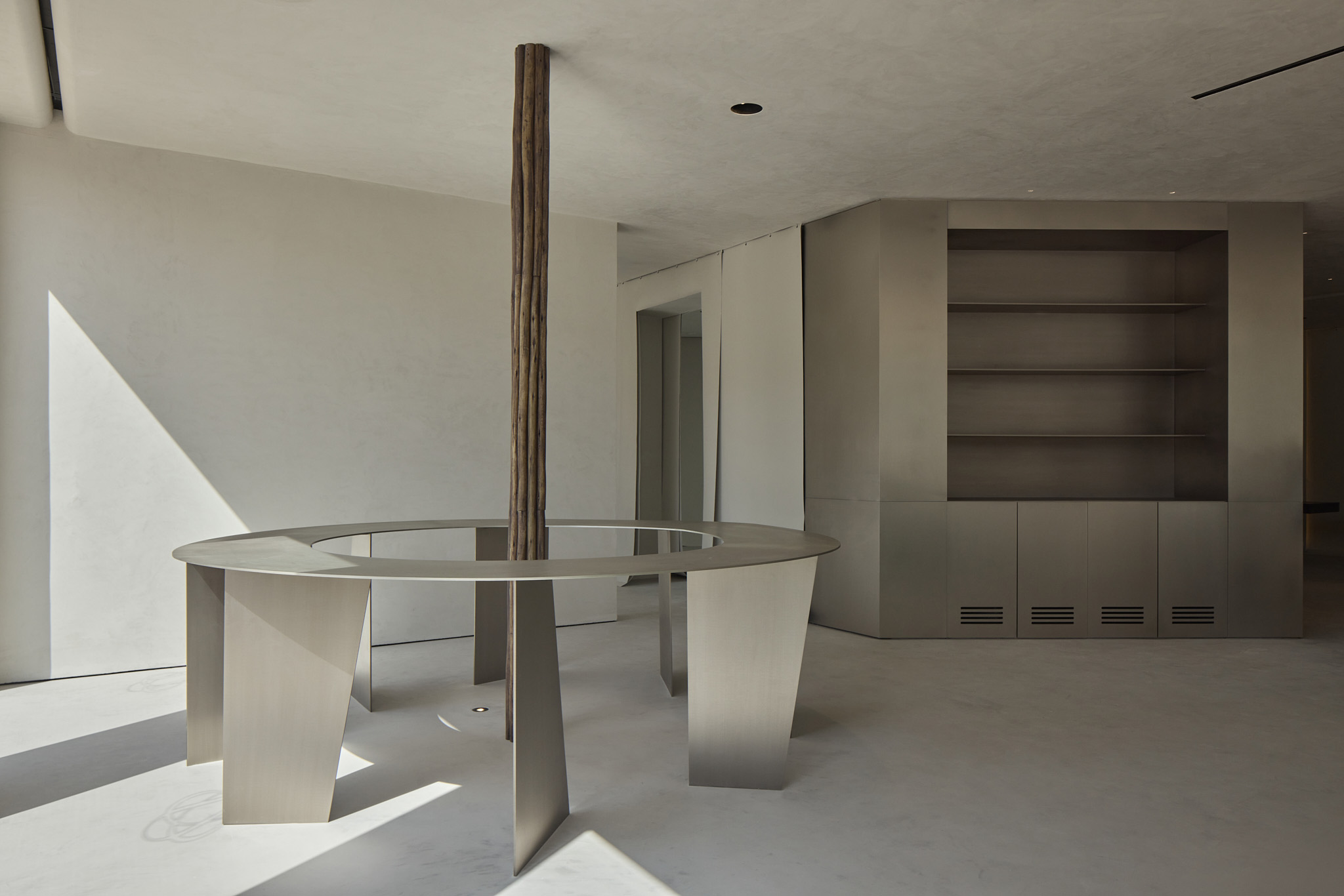
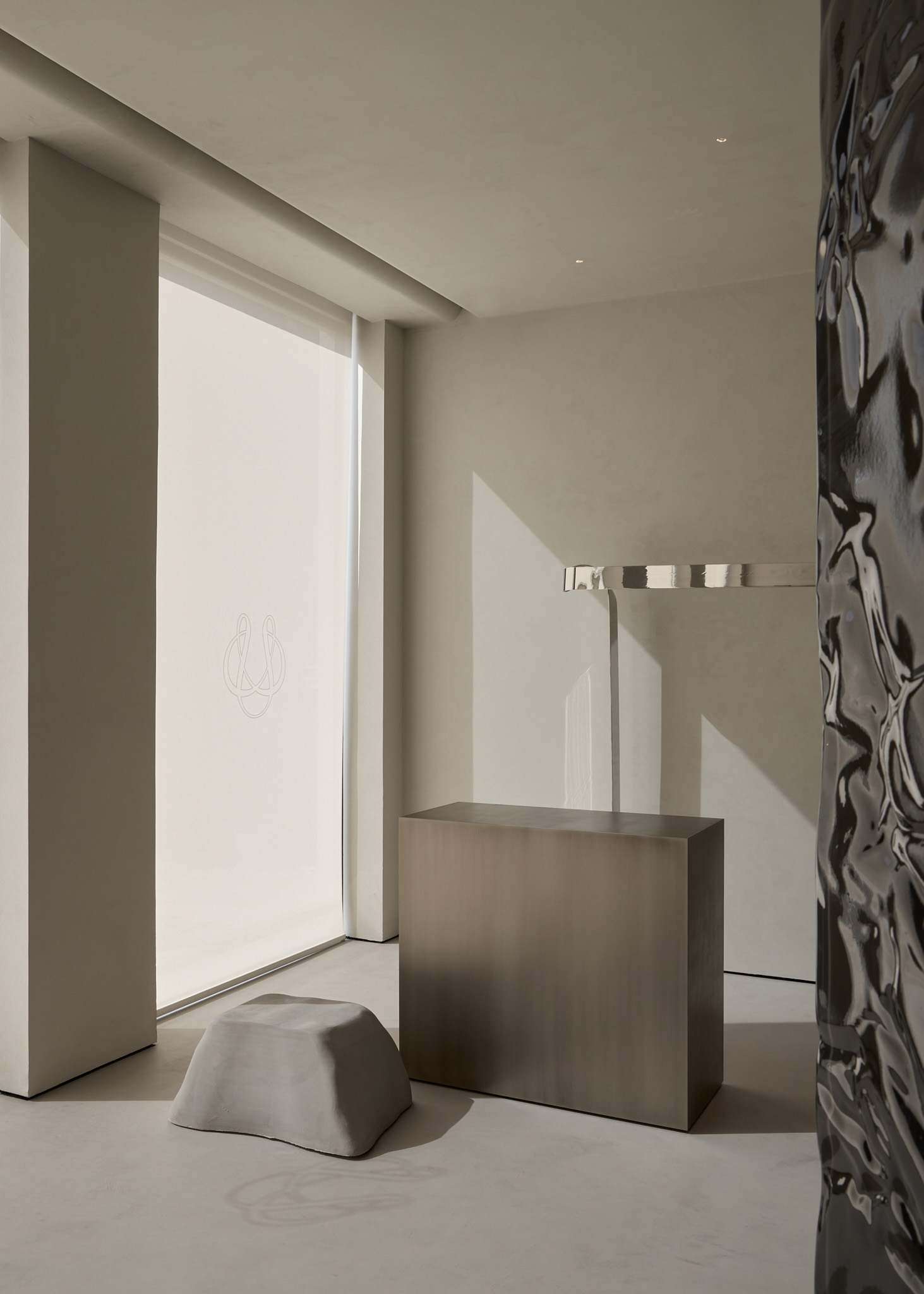
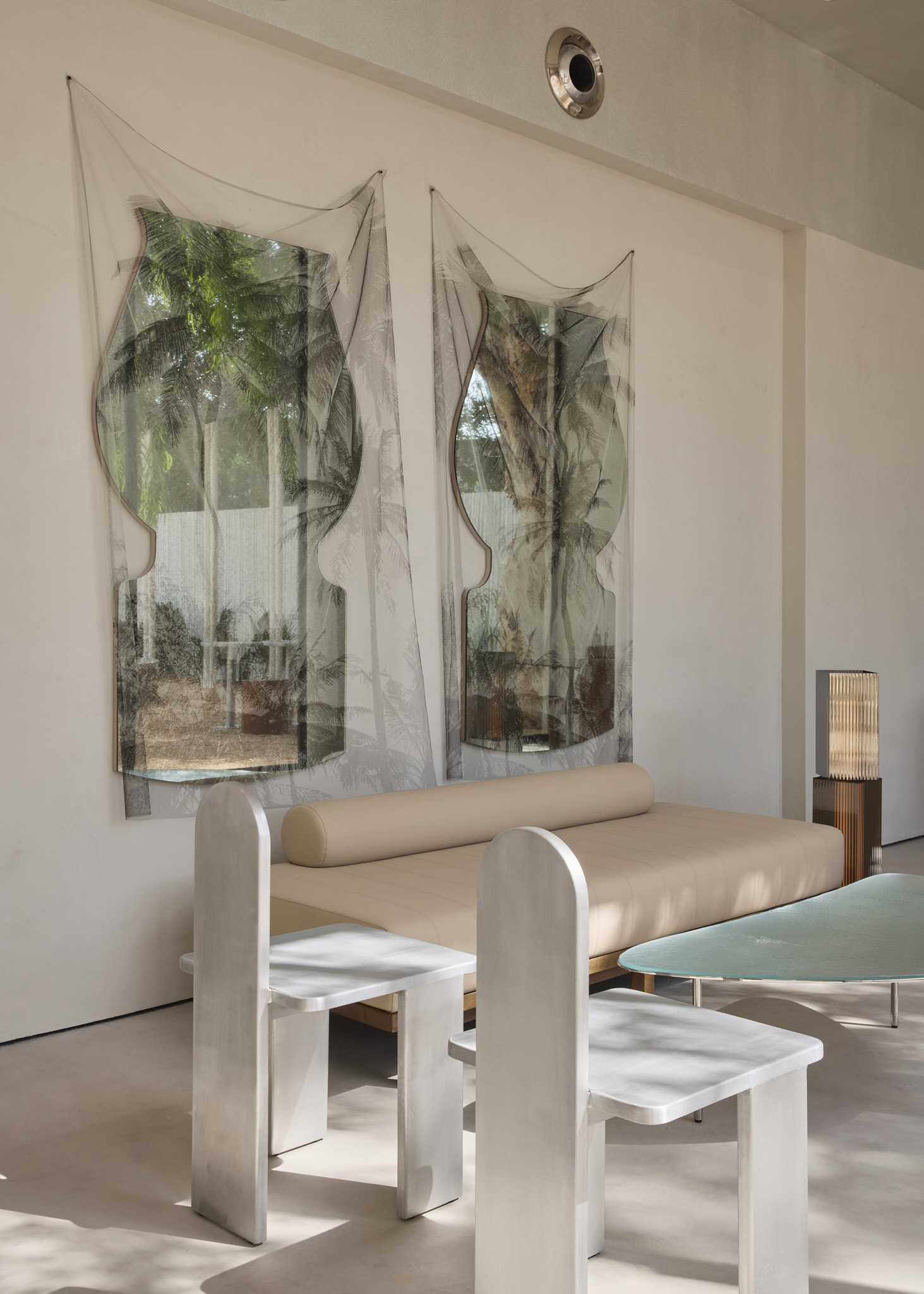
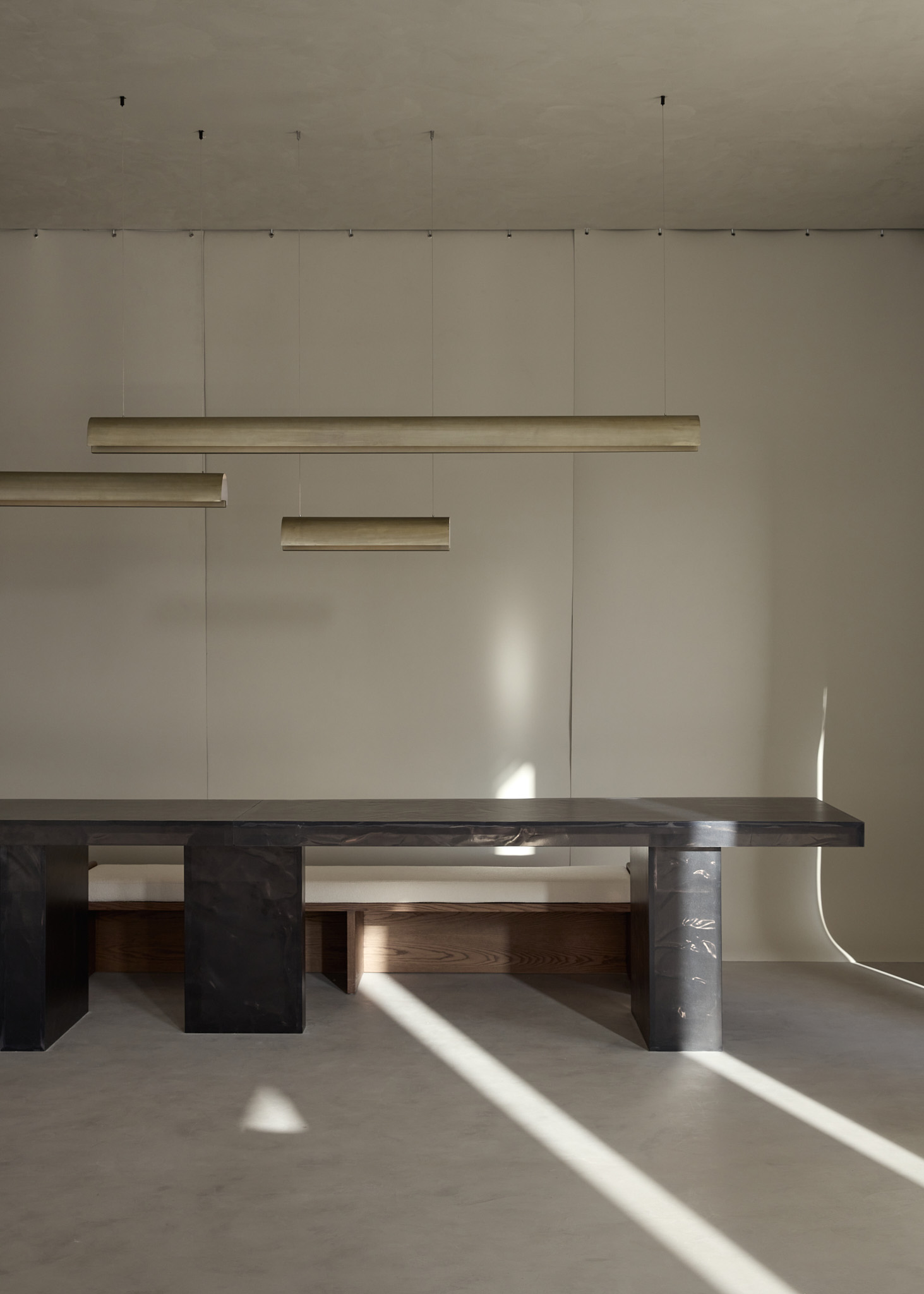
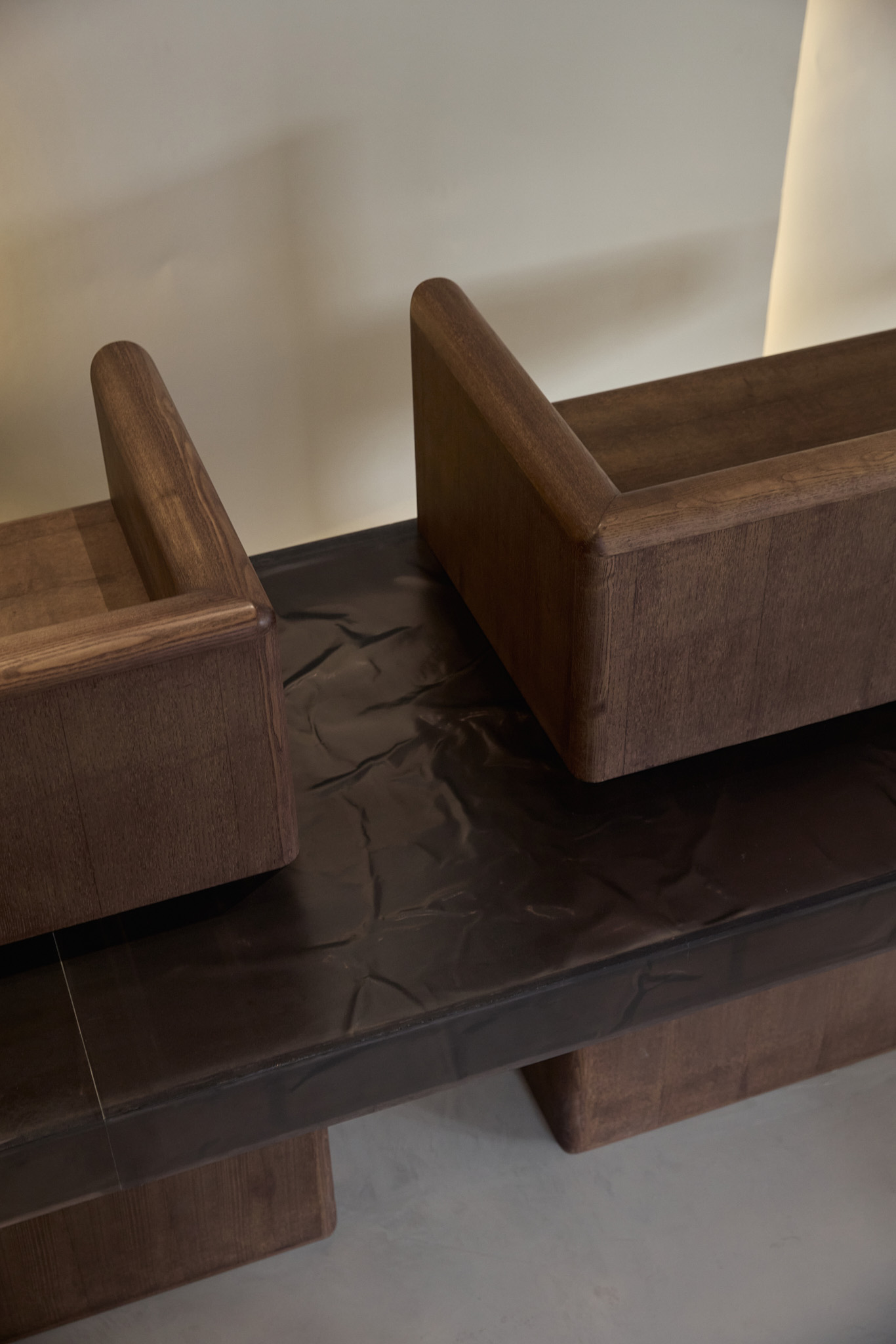
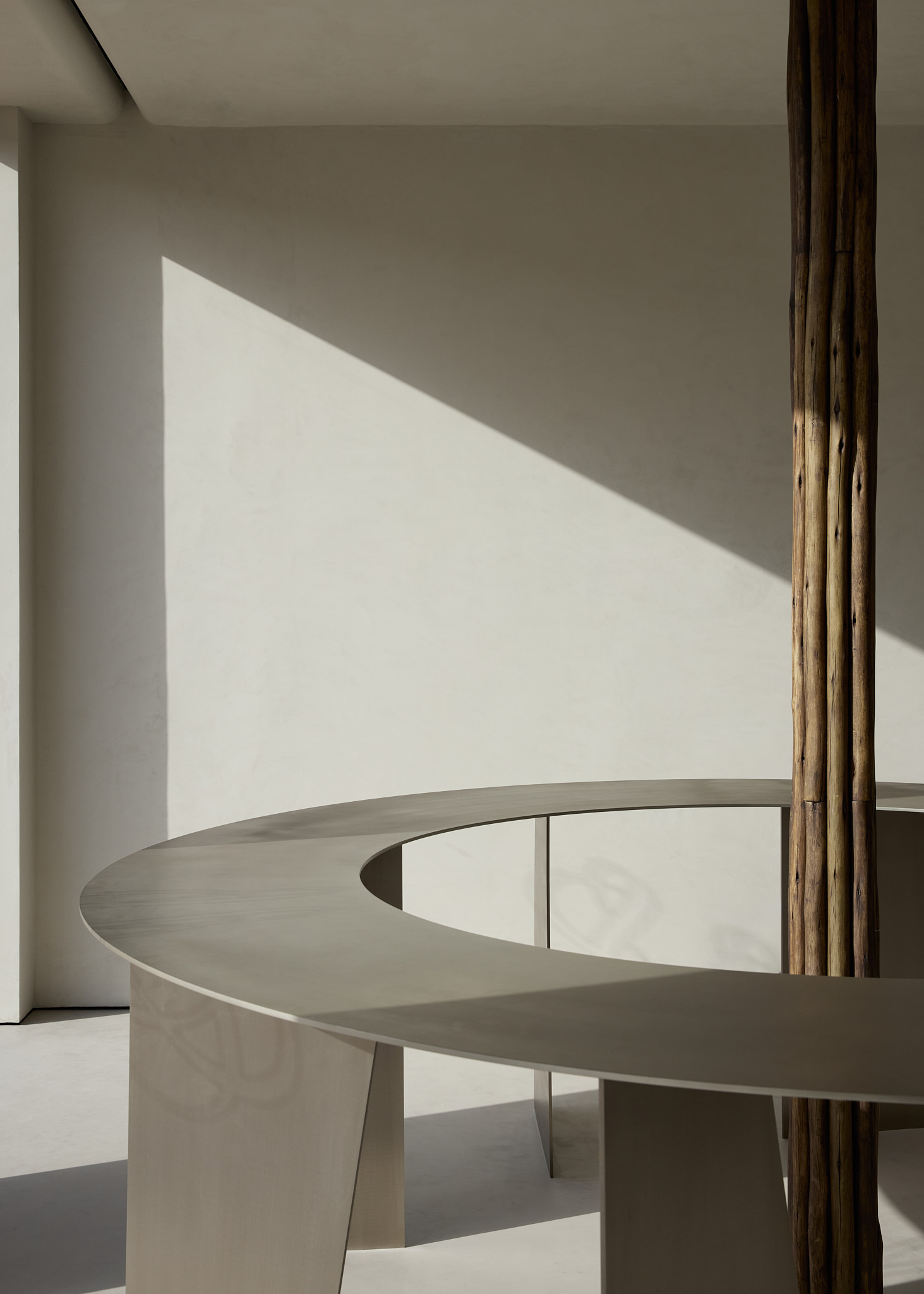
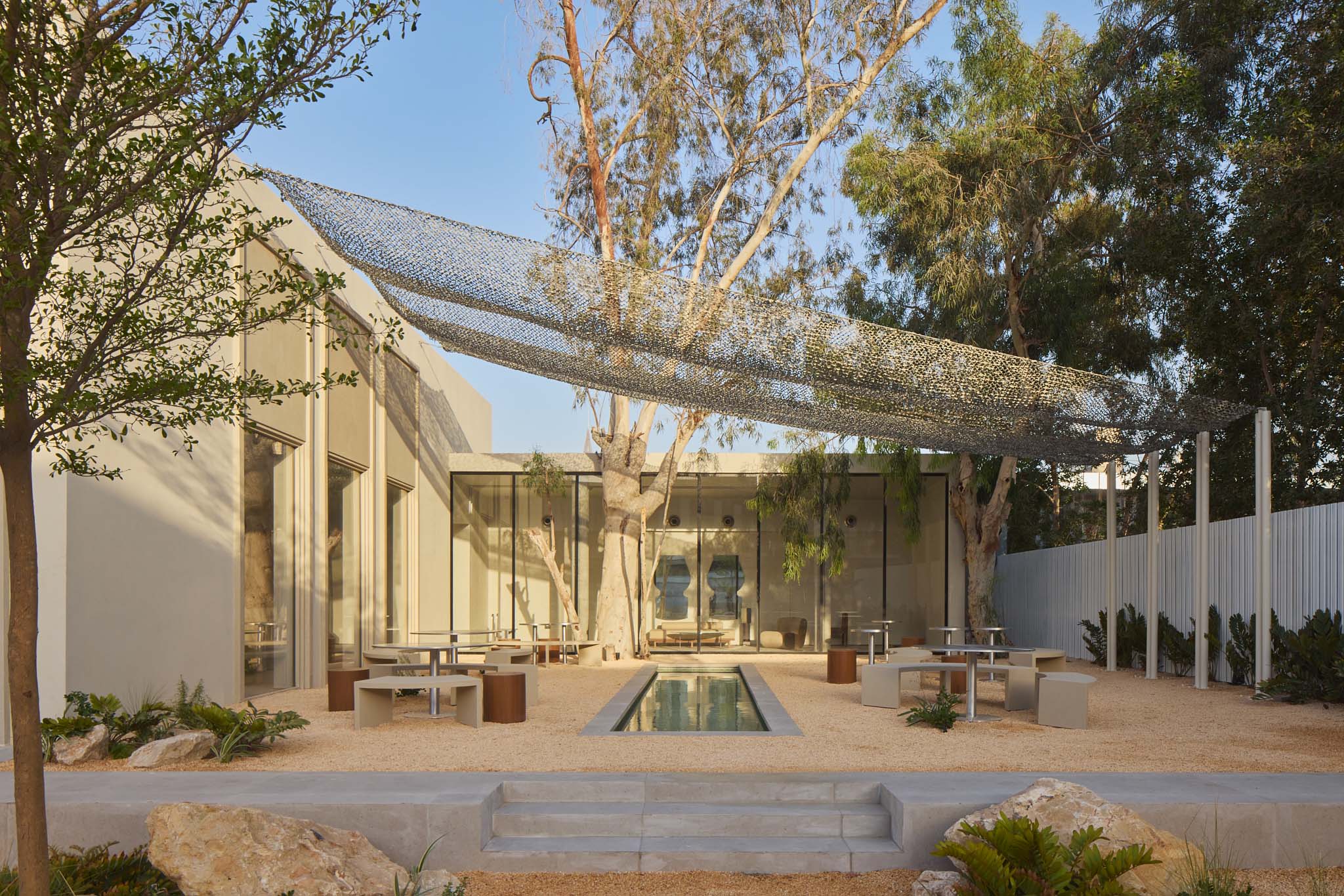
The Meld is a multi-use concept store and café blending fashion, food and community. The space masterfully repurposes a 1970s residential villa in Dubai’s Jumeirah old neighbourhood and transforms it into a contemporary setting featuring a minimalist approach. The space features an open layout divided into curated spaces where the clients; Afra & Shama Al Ghurair’s homegrown brands are displayed in the retail area. A key feature of the layout is the visual and physical connection to the outdoor courtyard which includes a water feature, landscape and a shaded seating extending the retail and café experience into the garden area.
The client’s brief was to create an experimental concept store that serves as a platform for multiple homegrown brands, beginning with the client’s own Abaya (local women’s gowns) brand; Fold. Accordingly, our design centered around providing a gallery-like space for young artists and homegrown products to be presented to the public as a support to upcoming artists and entrepreneurs.
Our recommendation to the client was to keep the space feeling unpolished, liberating and open to creative experimentation and evolution which they have agreed to. Hence, it was important in our design that the space looks like a creative lab and not a traditional retail store.
While designing the space, there were a few constraints, largely related to the fact that the existing building is a 1970s residential villa, which had an irregular structural grid, low ceilings and a fragmented layout. Such constraints became part of the design concept and were embraced by us rather than concealed.
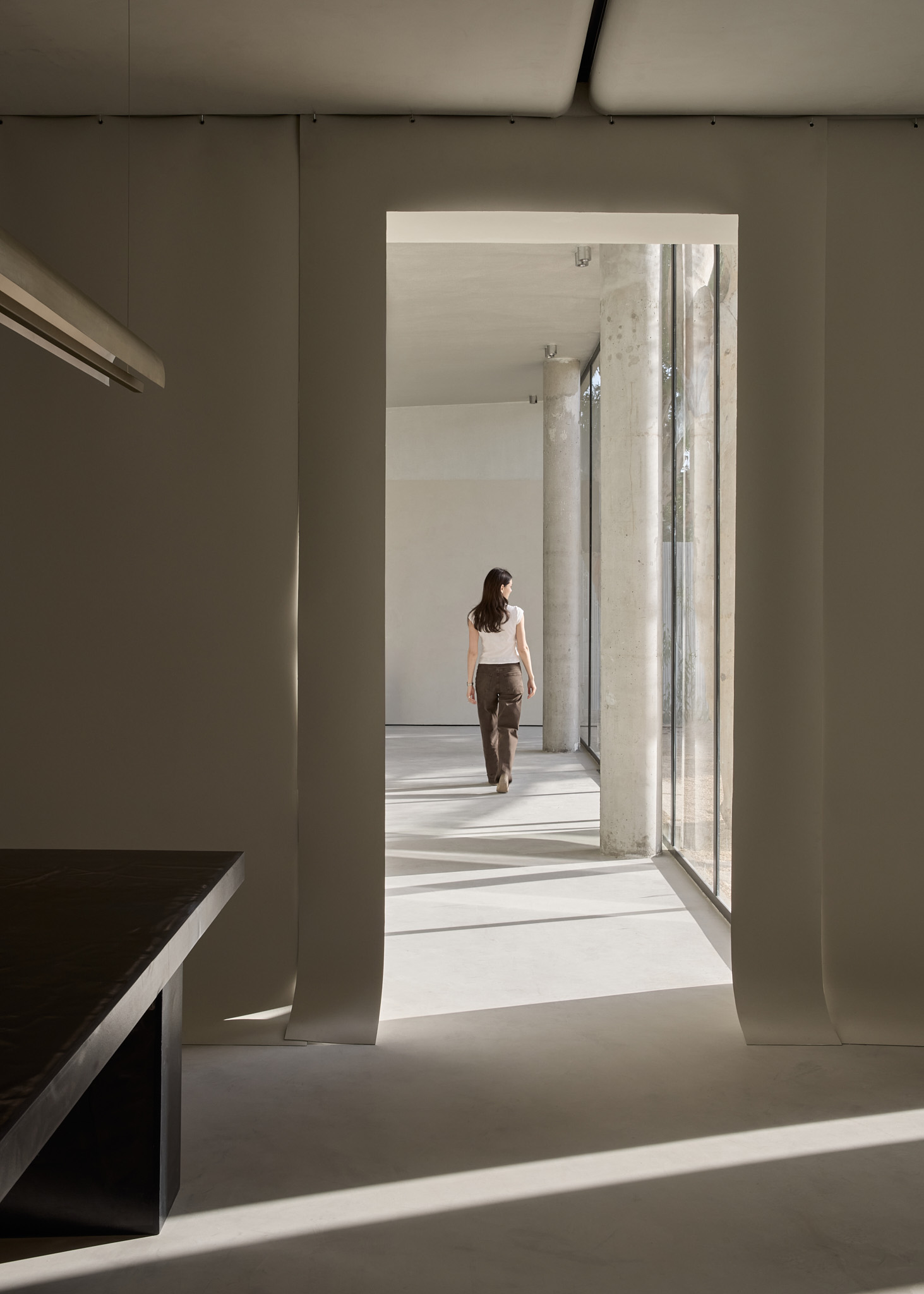
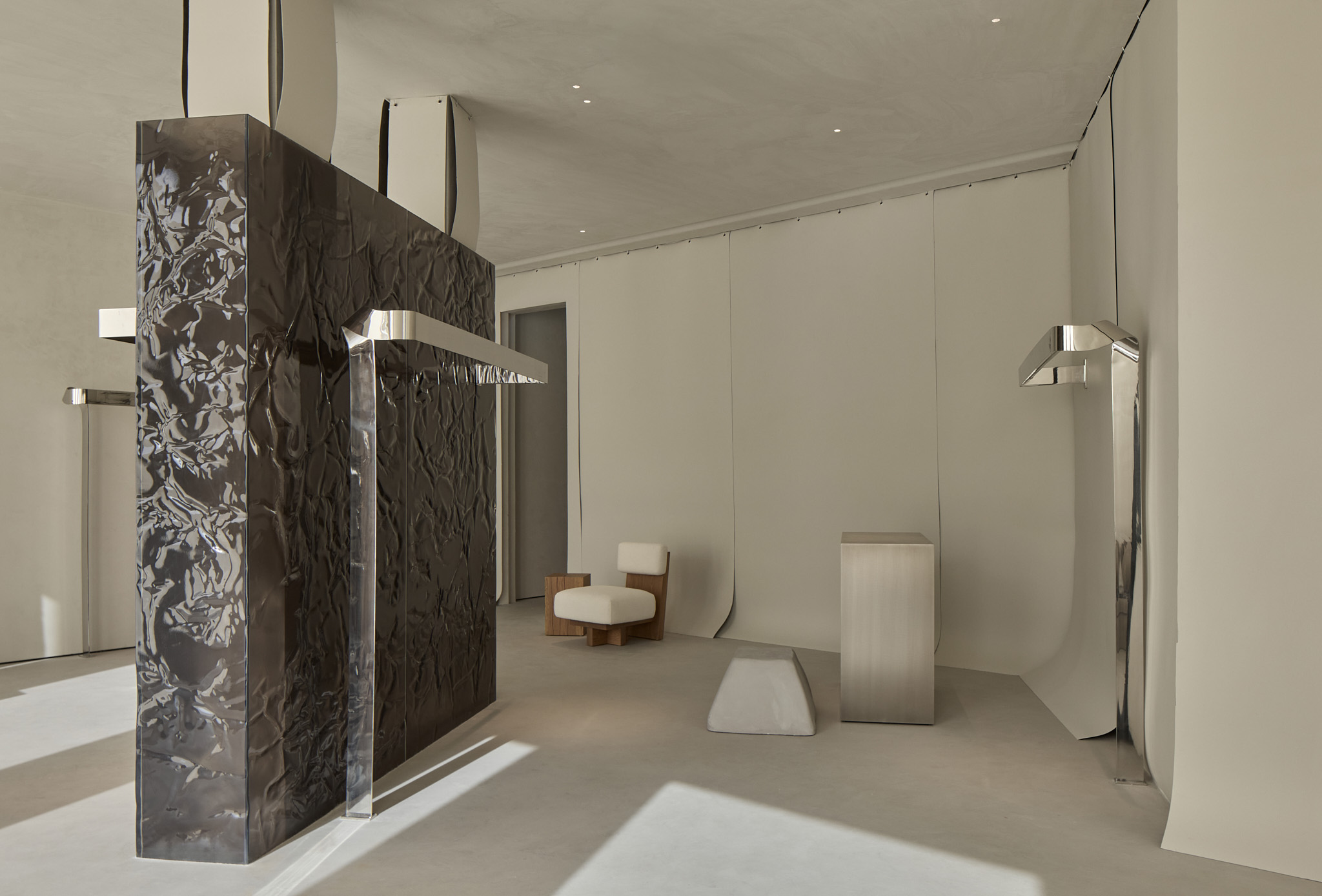
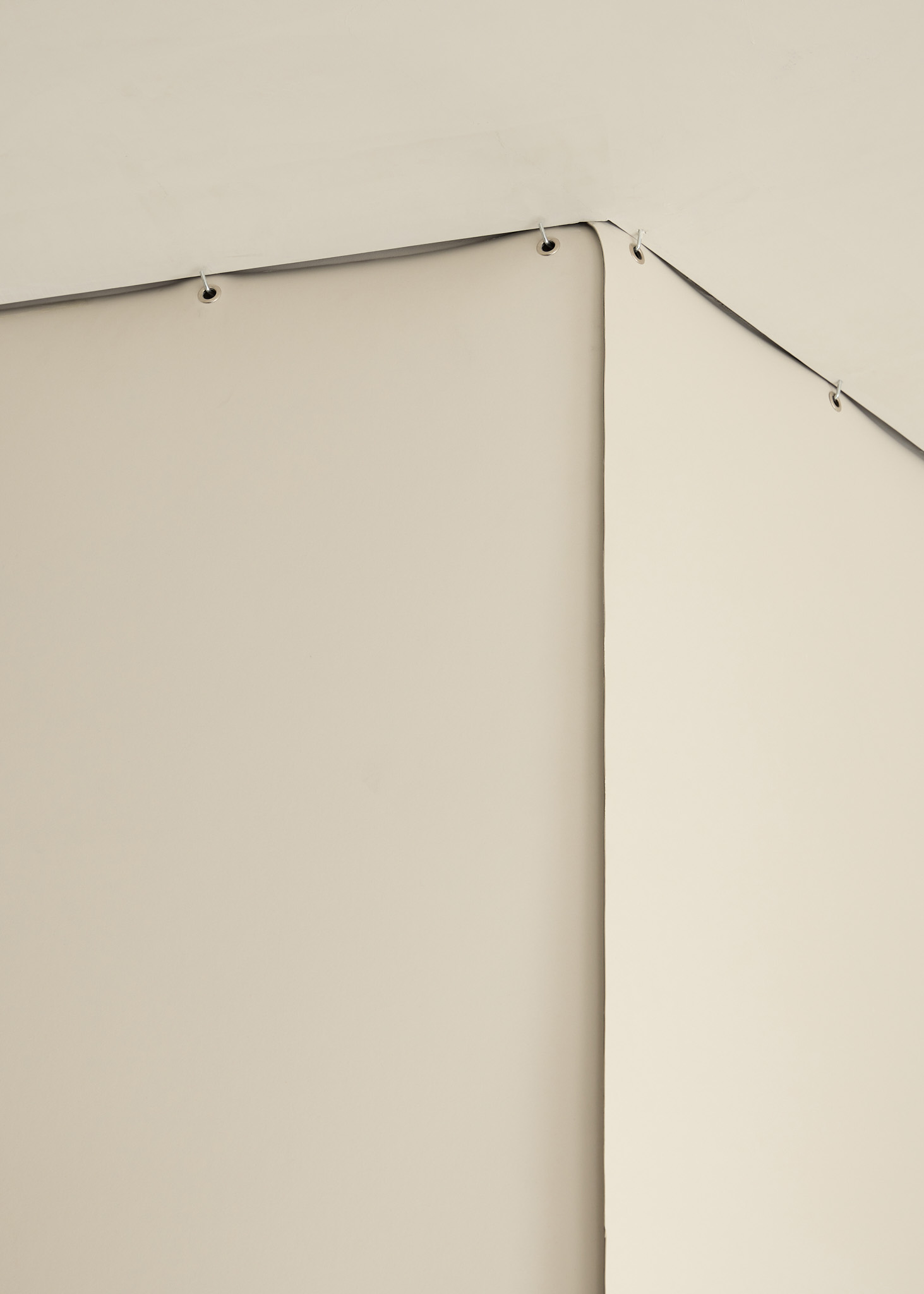
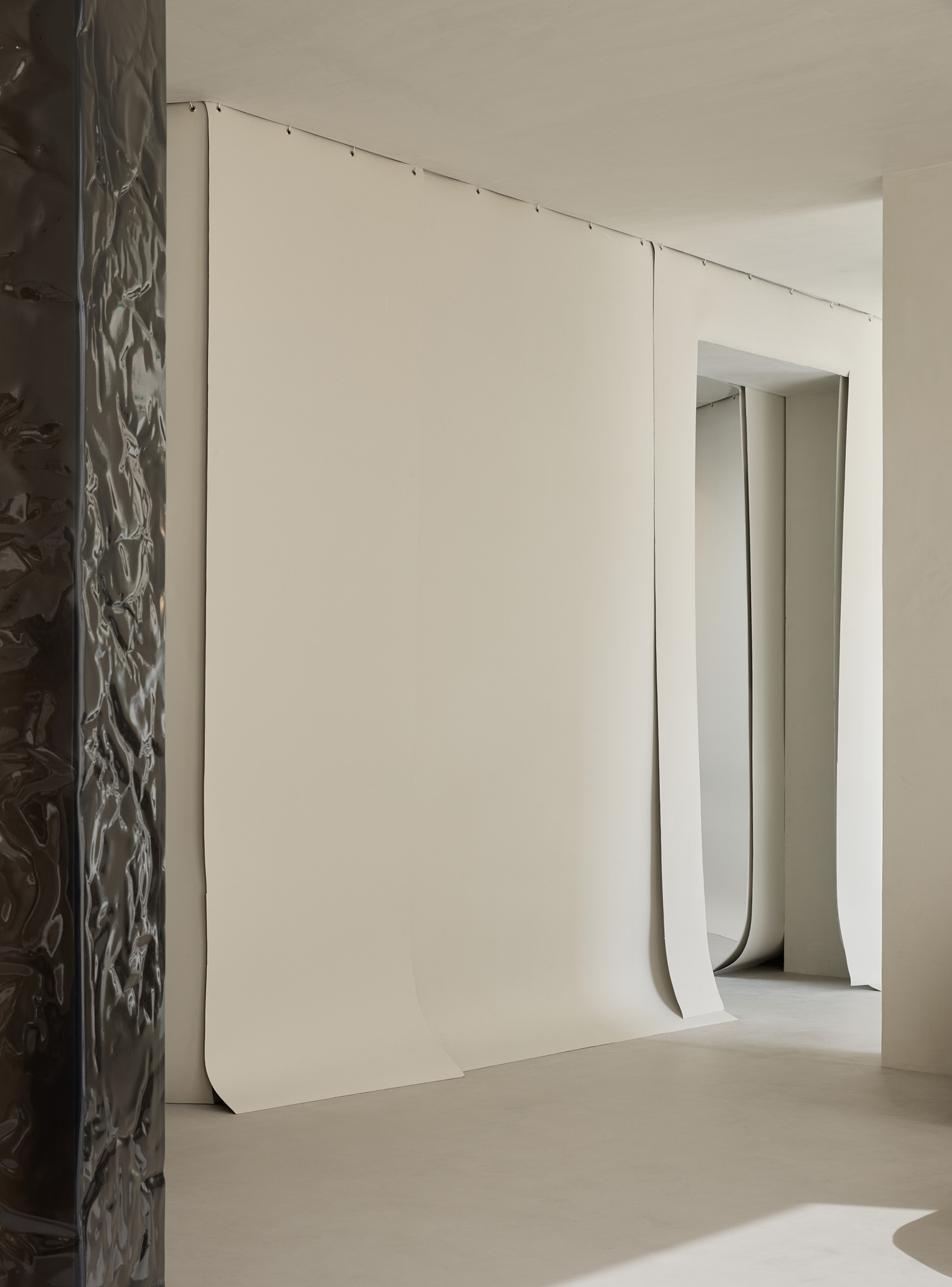
For the materials and method of construction, the main intervention was wrapping the walls in linoleum. While linoleum is traditionally a flooring material, here it was used unconventionally on the walls offering a sustainable, biodegradable and warm texture. This resulted in a seamless, textile-like quality that is hung with exposed hooks which is a simple construction approach.
The Meld Concept successfully addressed the challenge of transforming a fragmented 1970s residential villa which into a cohesive and contemporary concept store. That required a complete makeover of the façade while opening up the space internally in a way that is operationally efficient and inviting to the clients. The resulting space offers an ambiance that is fluid, non-commercial, relaxed and emotionally engaging—a contrast to standard, polished retail spaces.
Another challenge that was addressed was to design a space that supported an evolving rotation of local brands rather than one fixed brand and its narrative. We made sure that our design was fluid and adaptable with a central activation space to be able to consistently introduce new brands while maintaining the project identity.
The Meld Concept employs original thinking and design through the use of linoleum, a material for the floor, on the walls, cut in irregular, child-like, naïve shapes to wrap the entire interior. This unique use for the material endows the space with unfinished paper-like backdrop for displaying a mix of different products.
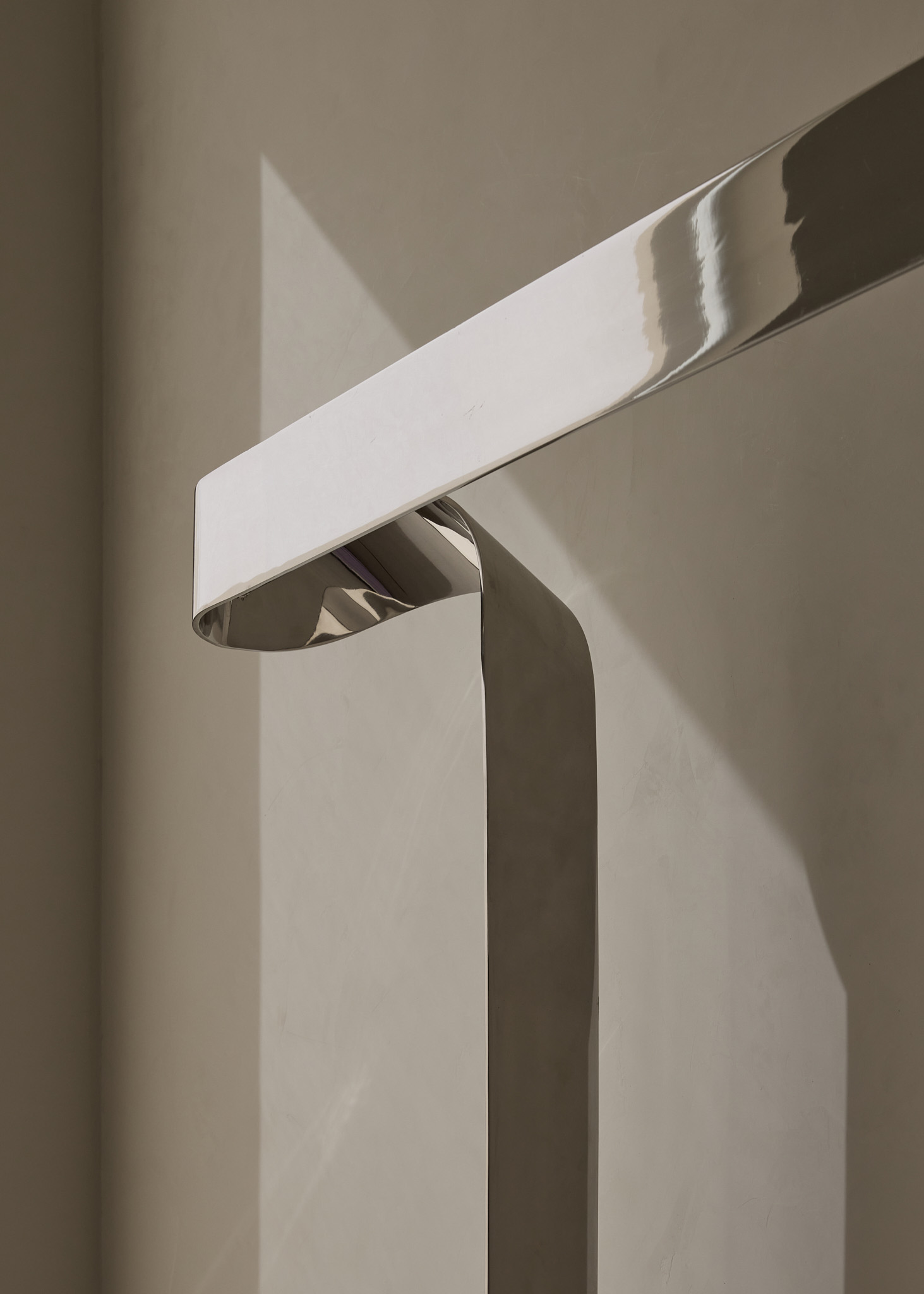
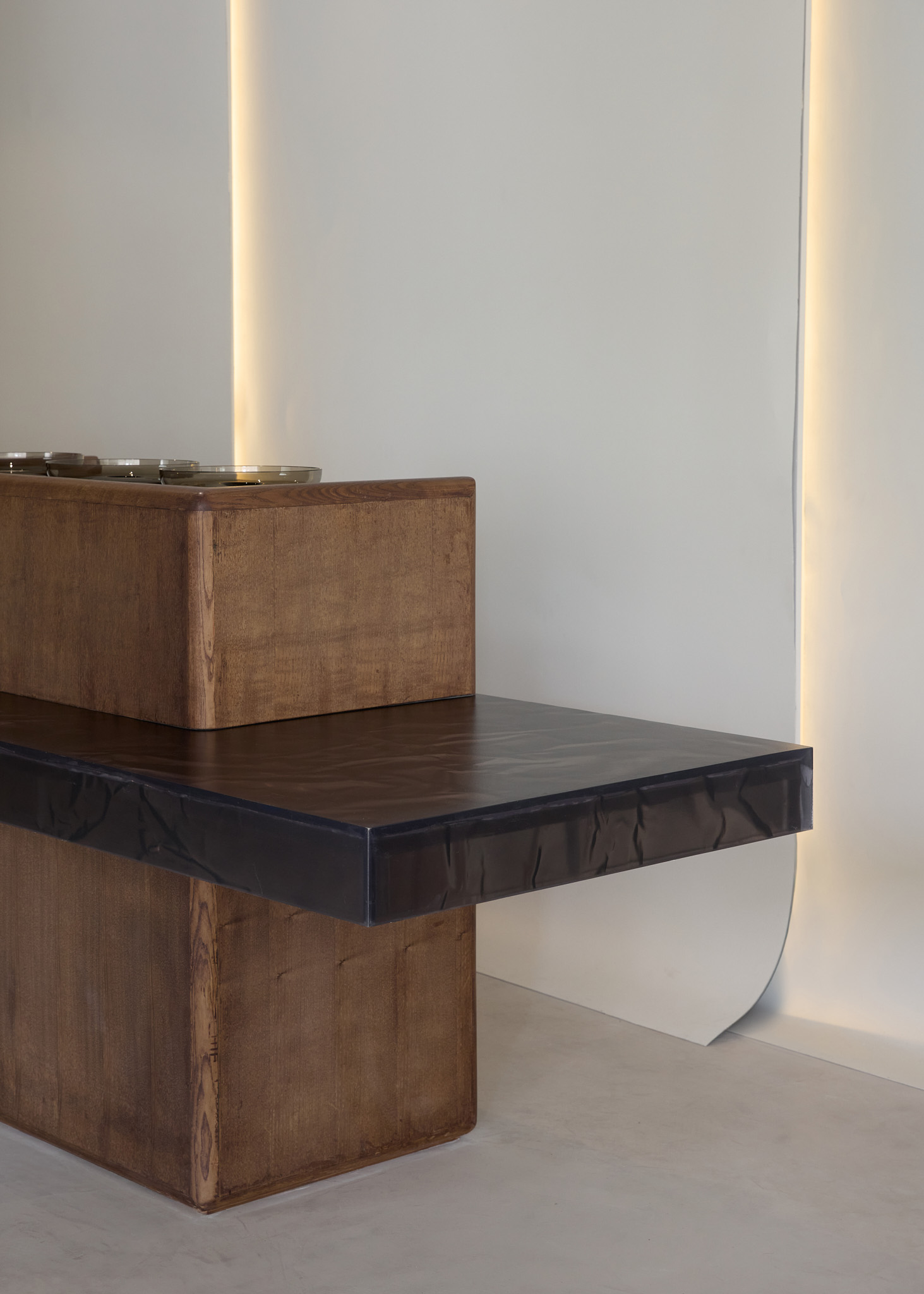
The materials used in the design were all sustainable (linoleum, stainless steel and 3form resin) and incorporated in unexpected, avant-garde ways to create a tactile, low-impact and emotionally resonant space.
The Meld Concept sets a design precedent for homegrown, women-led brands that foster local entrepreneurship and creative industries. As a communal space and an innovation hub, it organically invites creative talent and the local community together. The space offers a flexible activation area specially designed for pop-ups, which enables emerging designers and homegrown brands to display, test and evolve their products in a nurturing and creative space.
The project uses sustainable materials, including the linoleum applied to the walls. Linoleum is a biodegradable, renewable material made from linseed oil, wood, flour and jute. Additionally, 3 form resin sheets made from 100 percent recycled content via molecular recycling incorporating dense plastic waste and synthetic fibers from textiles and carpets were used. Stainless steel was also incorporated for key elements—which is fully recyclable and known for its long lifespan, reducing the need for future replacements. We also involved low waste application techniques whereby linoleum was cut into irregular shapes to conceal the existing irregular structure without major intervention resulting in unnecessary waste. Lastly, The Meld Concept employs energy efficiency and natural light. The structure of the layout maximizes natural daylight, thus reducing the dependence on artificial lighting.